
- Home
- Author's Archive:
Liquor Agents: A Refresher on Rights and Responsibilities
All licensees in British Columbia are responsible for knowing and complying with the rules set out in the Liquor Control and Licensing Act, the Regulation as well as the terms of their licence. This includes liquor agents.
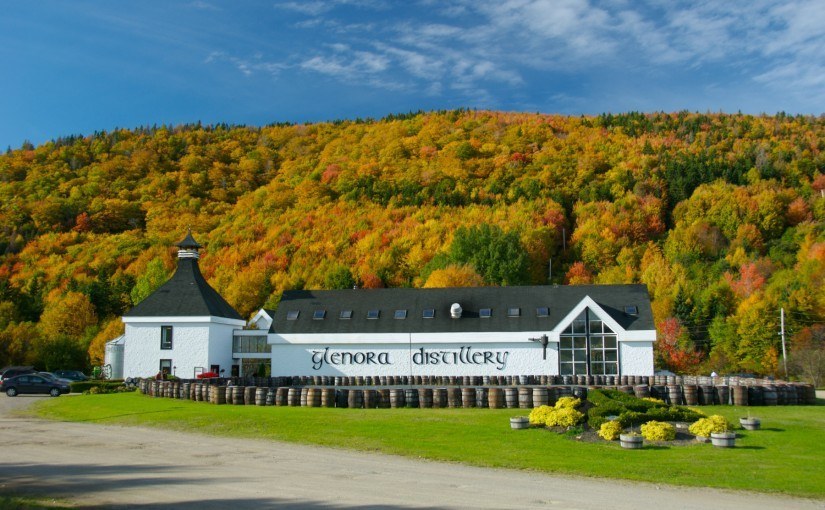
Battle of the Glen Part 3 of 3: You can take the “Glen” out of Scotland, but you can’t take the Glen out of “Glen Breton”
This is part 3 of a three-part series. For Context see Part 1 here and Part 2 here.
The Federal Court of Appeal allowed the appeal and directed that the Registrar of Trade-marks allow Glenora’s application to register Glen Breton. Although the Association sought leave to further appeal to the Supreme Court of Canada, leave was denied, thus bringing the Battle of the Glen to a close in Glenora’s favour.

The Battle of the Glen Part 2 of 3: Confusion in the Marketplace
For context, see Battle of the Glen Part 1
When Glenora applied to Register “Glen Breton” as a trade-mark for use in association with its whisky, the Association opposed the registration. Specifically the Scotch Whisky Association challenged Glenora’s ability to use a mark prefixed with the word “glen” for its whisky. It claimed that the use of “glen”-prefixed marks in association with several well-known single malt Scotches, including Glenlivet, Glenmorangie and Glenfiddich, has resulted in an association in consumers’ minds between the word “glen” and whiskies distilled in Scotland.
What signage will your establishment be required to display as “Public Educational Materials” in 2015?
In response to Recommendations #3, #4 and #5 contained in the Final Report, the Liquor Control and Licensing Branch is considering a requirement that in 2015 all licensed establishments and liquor stores display “social responsibility educational materials” in their premises.
The Cost of Doing Business
Though Mr. Yap’s Final Report has been widely praised for its progressive recommendations related to the production and sale of alcohol in British Columbia, there are nevertheless recommendations contained in the Report that should be of concern to licensees.

Minimum Wage for Liquor Servers
The minimum wage in British Columbia is set out in the Regulation of the Employment Standards Act. Since May 1, 2011 there has been a separate minimum wage for employees who serve liquor in British Columbia. The general minimum wage is currently $10.25 per hour, whereas the minimum wage for those who serve liquor is $9.00 per hour.
Focusing on Food Part 2
On December 5, 2014 the British Columbia Supreme Court published the reasons for judgment in Brownco Holdings Ltd. v. British Columbia (Liquor Control and Licensing Branch) (“Brownco Holdings”).
Focusing on Food Part 1 – Liquor Licence Laws BC
The Liquor Control and Licensing Branch issues food primary licences to businesses (restaurants) where the primary purpose, through all hours and areas of operation, is the service of food. This is in contrast to liquor primary licences (bars, lounges and night clubs) where the primary purpose of the business is the service of liquor.
Enforcement by the Numbers
Between January 1, 2010 and December 31, 2013 the Liquor Control and Licensing Branch conducted 48,625 inspections of licensed premises and special events throughout British Columbia.